
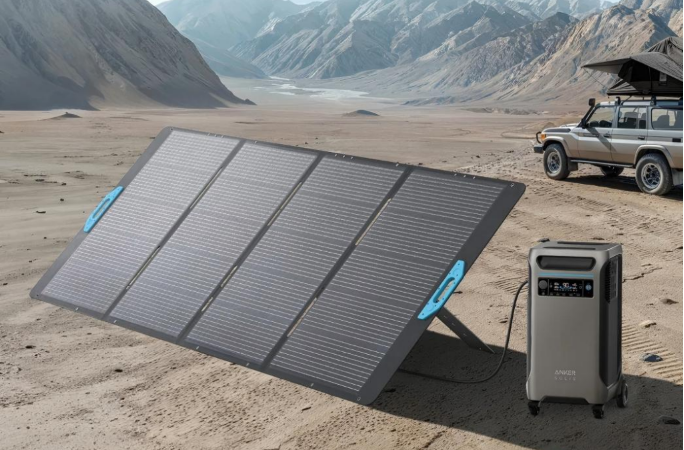
Homeowners gain the most from panels solar home when they match daily energy habits with the rhythm of sunlight. Solar power production rises and falls throughout the day, and the way households schedule appliances, position panels, and pair solar with storage determines overall efficiency. With thoughtful usage, solar systems deliver cleaner electricity, lower bills, and greater independence from the grid. Portable options such as the Anker SOLIX PS400 Portable Solar Panel make this optimization more flexible, offering 400W of power, four adjustable angles, and high conversion efficiency for a range of home or off-grid applications. Strategic behavior plays a major role in transforming sunlight into measurable value.
Daily Behaviors That Strengthen Solar Panel Efficiency
Matching High-Load Tasks to Peak Sun Hours
The simplest way to extract more value from sunlight is to perform energy-heavy tasks during midday production peaks. Most homes produce the strongest solar output between late morning and early afternoon, when the sun sits high and shadows shrink. Running washing machines, dishwashers, pool pumps, air conditioning cycles, or electric vehicle charging during these hours reduces the amount of grid electricity required. Even modest shifts—such as pre-cooling the home between 11 a.m. and 3 p.m.—can remove evening energy spikes that would otherwise rely on utility supply. This principle also applies when using portable panels such as the Anker SOLIX PS400. Its monocrystalline design and up to 23% conversion efficiency help households charge power stations faster when positioned during peak sunlight. Aligning household tasks with solar availability multiplies the system’s impact without changing equipment.
Maintaining Consistent Panel Exposure Across the Seasons
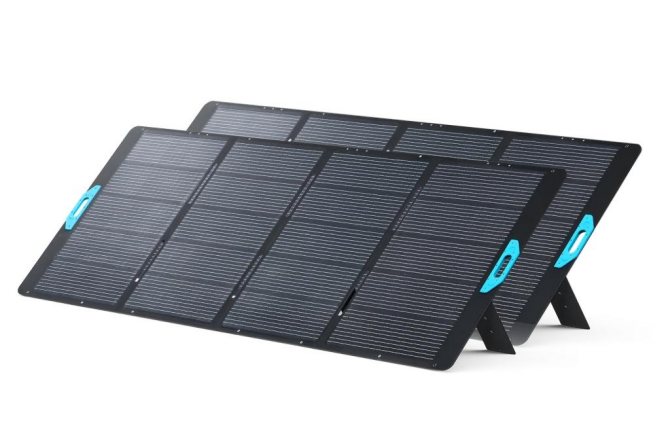
Sunlight angles vary throughout the year, and homeowners gain more power when they adjust panel positioning—especially with portable or adjustable systems. Fixed rooftop panels rely on their installation angle, but movable panels allow more precise tuning. The Anker SOLIX PS400 provides four preset tilt angles—30°, 40°, 50°, and 80°—to match seasonal sunlight. A lower angle works well for summer’s high sun, while a steeper tilt captures more energy in winter when the sun sits lower in the sky. Seasonal adjustments can boost output significantly, especially for portable systems placed in yards, balconies, or remote settings. Better exposure reduces the amount of time needed to charge backup equipment and increases the share of daily home loads powered directly by sunlight. Over time, consistent exposure builds higher annual yields without adding more panels.
Distributing Energy Use to Avoid Large Short Bursts
Solar systems perform best when electricity demand stays smooth rather than spiking sharply. Instead of running multiple heavy appliances at once—such as dryers, ovens, and vacuum systems—households benefit from dispersing loads over longer periods. This approach helps homes rely more heavily on their own solar supply instead of pulling excess energy from the grid. It also benefits households with portable solar workflows. When users charge power stations with devices like the 400W Anker SOLIX PS400, distributing loads extends how far that solar-charged energy goes and reduces strain on the backup setup. Balanced consumption keeps both rooftop arrays and portable configurations functioning at higher efficiency throughout the day. This practice becomes especially effective when combined with smart scheduling, programmable appliances, or deliberate use of off-peak hours.
Solar System Configurations That Improve Household Results
Using Portable Panels to Supplement Fixed Arrays
Many homeowners assume rooftop panels alone must handle all solar production, but portable options add substantial flexibility. A movable system, such as the Anker SOLIX PS400, supports home energy use in several meaningful ways. It can charge a portable power station independently, supply energy directly to off-grid equipment, or boost total available solar power when household demand rises. Because the PS400 folds and travels easily, families can place it where sunlight is strongest—whether in the backyard, at a secondary residence, or during off-site activities like camping or project work. This adaptability creates supplemental production without modifying the main installation. In addition, its IP67 waterproof rating allows safe operation in varied outdoor conditions, giving homeowners more opportunities to maximize harvest time. Supplemental panels can support resilience during outages, reduce grid reliance, and improve seasonal energy output.
Capturing More Sunlight Through Frequent Panel Repositioning
Homeowners significantly increase real-world solar gains by shifting portable panels throughout the day. Sunlight direction changes hour by hour, and while rooftop panels stay fixed, movable systems offer an advantage: dynamic alignment. A panel tilted toward early morning light helps boost the day’s initial power reserve, while repositioning toward afternoon sun maintains strong output late into the day. With the PS400’s lightweight folding design and simple tilt adjustments, repositioning becomes a quick way to capture sunlight that fixed systems may miss. Users who monitor shading patterns—or avoid placing panels near structures, fences, or trees—maintain better efficiency. This routine ensures energy production remains steady even under partially shifting light conditions. Small repositioning habits accumulate into notable gains in daily and annual solar performance, especially when powering portable stations.
Combining Solar Harvesting With Smart Storage Practices
Solar energy becomes even more valuable when paired with conscious storage habits. Charging a portable power station during peak light ensures energy remains available in the evening, when home loads climb, and rooftop panels wind down. This practice allows sunlight collected by the Anker SOLIX PS400 during the strongest hours to support nighttime activities—cooking, lighting, entertainment, or remote work. Users can also reserve stored energy for emergency backup, reducing exposure to outages or infrastructure interruptions. The PS400’s strong open-circuit voltage and efficient charging performance shorten the time required to fill a station, making daily solar-storage cycles simple and dependable. Over time, incorporating storage into daily patterns reduces grid dependence and supports more deliberate control over electricity use. Smart storage also enables households to avoid peak utility pricing windows when rates surge.
Conclusion
Homeowners maximize the benefits of solar power by adapting energy habits, optimizing panel placement, and integrating portable solutions where needed. Aligning high-load activities with midday sunlight, adjusting panel angles seasonally, and spreading out appliance usage all contribute to stronger daily solar performance. Portable systems such as the Anker SOLIX PS400 Portable Solar Panel expand this potential by capturing sunlight from optimal locations, offering fast charging with high conversion efficiency, and enabling solar-storage strategies that carry energy into evening hours. Effective solar usage patterns transform sunlight from a passive resource into an active contributor to lower bills, greater independence, and smoother household energy planning.